
You Don’t Have to be a Financial Expert: How Two Volunteers Found a Place to Serve Through Financial Catalyst
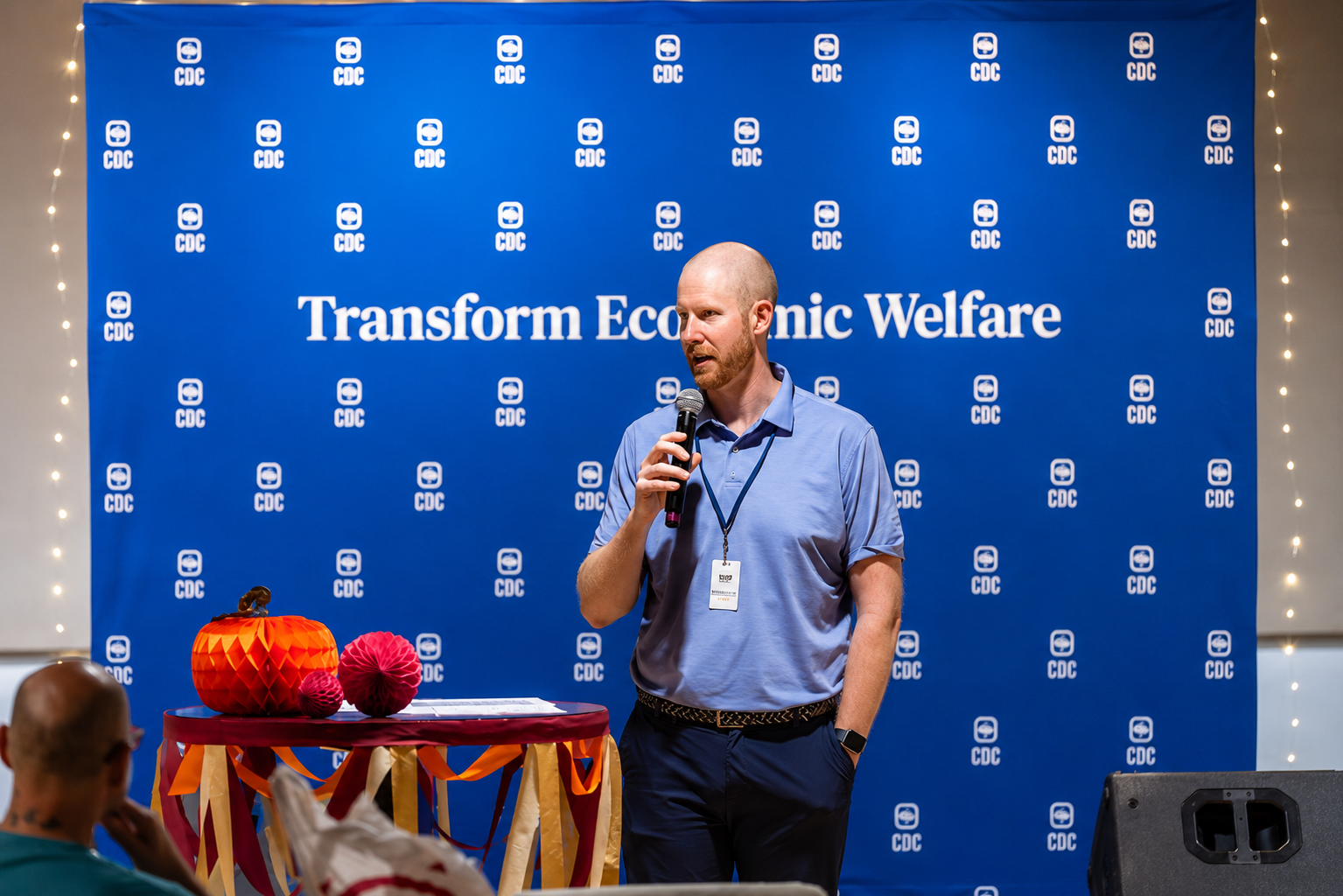
When Jason Reed first discovered Financial Catalyst, an initiative of Watermark Community Development Corporation, he immediately recognized a connection between his professional experience and an opportunity to serve.
A CPA by trade who had spent his career in corporate financial accounting and financial analysis, Jason came across a short feature about Financial Catalyst in Watermark News in the fall of 2021. As he learned more about the initiative and its Faith & Finances curriculum, he began to wonder if his professional gifting could be used in a way that went beyond his career and directly served God’s Kingdom.
A few conversations later, Jason signed up to volunteer at the South Dallas campus. In the spring of 2022, he helped facilitate his first Faith & Finances class, and he has been serving ever since. What Jason discovered, however, was that Financial Catalyst was about much more than finances.
“I was surprised by how familial it felt,” he remembers. His first class had only eight participants, and most of them had never met before. But over the course of 11 or 12 weeks, something changed.
“By the end, there was very much a family environment in that room.”
Today, classes begin with 25 participants, but that same sense of community remains. Participants sit around tables with volunteers who serve as allies, building relationships, offering encouragement, and walking alongside one another as they work toward their goals.
And sometimes, the volunteer sitting at the table is the least likely person you would expect to be helping someone navigate their finances. For Jason’s wife, Connie, finances were never an area where she felt particularly confident.
“I don't like finances,” she laughs. “Managing my own finances kind of gives me hives.”
But years earlier, Connie had experienced her own financial struggles as a young adult. She had taken a financial class, worked through debt, and learned how to develop healthier money habits. So, when Jason told her that Financial Catalyst needed someone to sit at a table and encourage participants, her answer was simple.
“Yes. I can do that.”
Connie realized she didn't need to be a financial expert. She simply needed to be willing to sit beside someone and walk with them. That willingness has become one of the most meaningful parts of serving for both Jason and Connie.
Where Financial Conversations Become Personal
Money has a way of becoming personal very quickly. In Financial Catalyst, participants aren't simply learning how to create a budget or manage a bank account. They are talking about their habits, their hopes, their struggles, and their dreams.
Someone might share that they want to stop buying a daily coffee so they can save toward owning a home. Someone else might talk about wanting to start a business or break free from debt.
Those conversations can be vulnerable, especially when you're having them with people you barely know.
But something remarkable happens when people realize they aren't alone.
“It's accountability,” Connie says. “When you're walking with someone, you're also step by step encouraging good habits.”
Instead of simply handing participants a workbook and sending them on their way, Financial Catalyst creates space for people to learn together, encourage one another, and take the next step together.
For participants who may already feel overwhelmed or discouraged by their financial circumstances, that relationship can make all the difference.
“This is not a tips-and-tricks class to make a million dollars in 10 years,” Connie says. “It's how do we honor the Lord and make it day by day and do so in a way where we can hand something to our kids—where we can pass something down to the next generation.”
More Than a Financial Class
For Jason, one of the things that makes Financial Catalyst unique is that it doesn't begin with money. It begins with the heart.
“Financial Catalyst is not first and foremost a money management program,” he explains. “It's first and foremost a discipleship program that uses money management as the vehicle.”
The curriculum helps participants explore the biblical foundation behind their financial decisions. They learn to trust God, practice self-control, steward what He has entrusted to them, and pursue His Kingdom rather than simply building their own.
That message has challenged Jason, too. Early in his career, he admits, he treated his first credit card like free money, until it wasn't. He eventually found himself deep in credit card debt and had to make difficult sacrifices to change course. So when the class reaches the topic of credit, Jason doesn't teach from a place of having always gotten everything right.
“I don't sit up there in an ivory tower saying, ‘This is something I've always gotten right, and now you need to try to figure it out, too.’ I had to be shepherded and stewarded in how to reorient around some broken financial practices in my own life.”
That shared humility creates a different kind of environment. Volunteers aren't there because they have everything figured out. They're there because they are willing to walk alongside someone else.
A Ball of Clay and a Lasting Lesson
One of Jason's most memorable moments as a volunteer came during an activity involving something as simple as a ball of clay. Participants were asked to mold the clay into something representing a financial goal or something they hoped to accomplish. Most creations were understandably simple. But one participant created something extraordinary. In just a few minutes, he crafted a remarkably detailed and beautiful piece of art.
Jason later learned that the man had once been a well-compensated pastry chef at a respected restaurant. He had tremendous artistic talent, but after making some difficult decisions, he found himself in a season of financial hardship and had come to Financial Catalyst for help.
The moment stayed with Jason.
“Fallenness doesn't discriminate,” he says. “This was a talented guy who had been experiencing success in his career in a different season of life, who had stumbled on harder times and needed help getting a leg up to reestablish himself.”
The man's story was a reminder that financial hardship can happen to anyone. And it was also a reminder that asking for help isn't a sign of failure. It is an act of humility and courage.
“I’m not any better than these folks; I’ve just been practicing longer by the grace of God. He got to hold me on this front sooner. That’s the only difference between them and me,” said Jason.
“Financial Catalyst is communal in both the financial and biblical aspects. You’re seeing both layers. What makes the curriculum different is that it gets to the ‘why.’ Usually, financial education focuses on what you need to do. But Financial Catalyst spends time getting to the heart of why we make the decisions we do. We have to wrestle with things like, ‘I really just want what I want, and I can’t find the self-control to wait.’ That has to come from the Lord. I have to trust the Lord and His timing and believe that His Kingdom is a better kingdom to build than mine,” said Connie.
The Power of Showing Up
After years of volunteering, both Jason and Connie have learned that serving doesn't require having all the answers. In fact, Connie says volunteering has reminded her of something simple but important: the basics matter.
“Knowing what you're spending. Tracking your expenses. Living within your means. Praying through financial decisions. Practicing generosity.” These simple habits can easily get overlooked, but small changes can create lasting momentum. And generosity isn't reserved for people who have an abundance of money.
“You will see that it does not take a lot of money to be generous in your heart,” Connie says. “You can be generous with the money that you have, the skills that you have, how you respond to extended family. It just changes things.”
For Jason, the greatest encouragement he can offer someone considering volunteering is this: “Don't think about Financial Catalyst first and foremost through a finance lens. Think about it first and foremost through a discipleship and encouragement lens.”
You don't have to be a CPA or have a degree in finance. You don't have to have every area of your own financial life perfectly figured out. You simply need to be willing to show up, listen, encourage and walk alongside someone. Because sometimes the most meaningful thing you can offer isn't an answer. It's your presence.
“When you are willing to sit at a table and take the next step with someone, you may discover that you're not just helping change their financial future; you're becoming part of their story and family, and that’s why we volunteer.” –Connie Reed